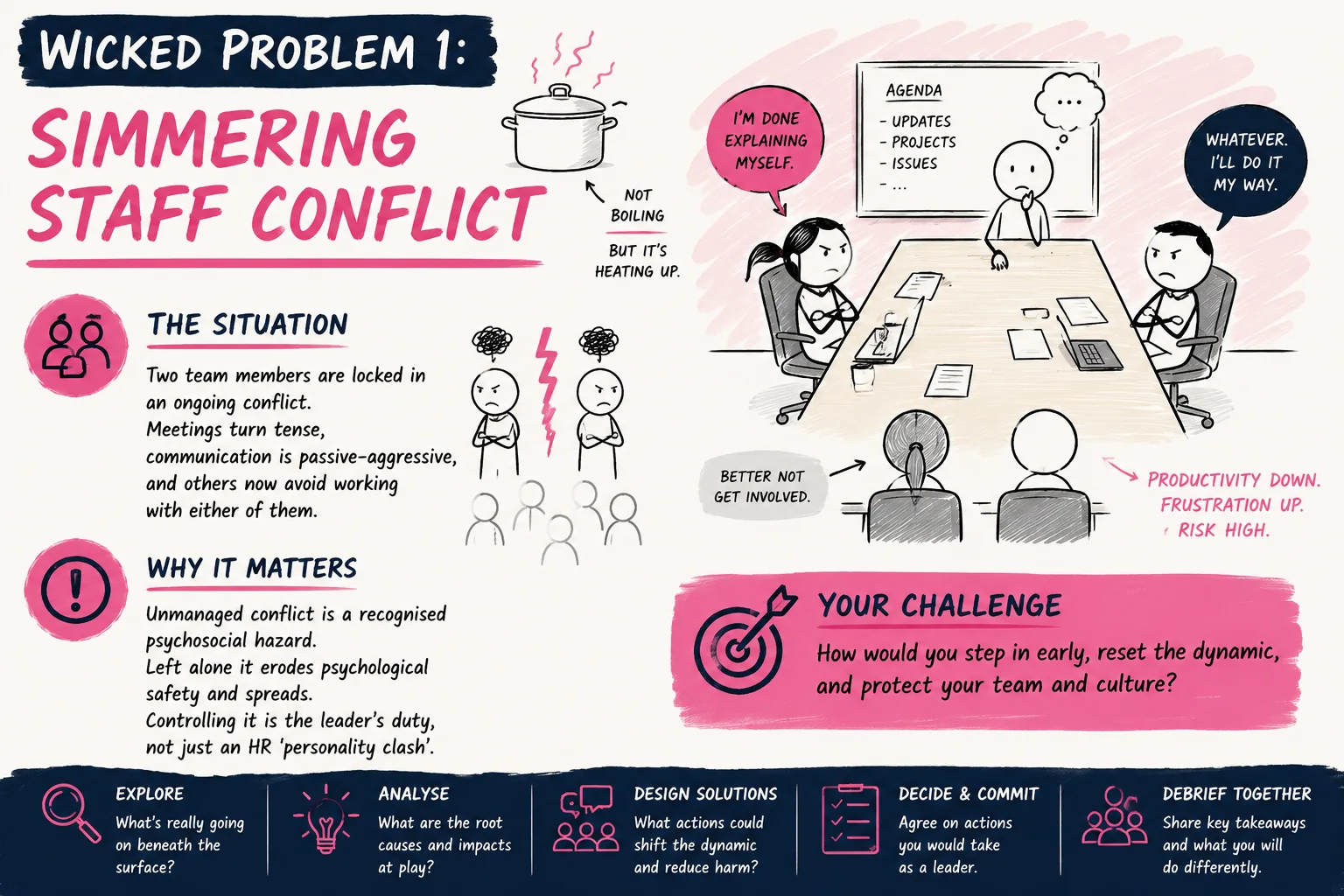
When Leadership Lets It Slide: The Silent Cost of Normalising Poor Behaviour
At Humn, we say this often: what leaders allow, the culture absorbs.
In every workplace, people take cues from leadership, not just through what is said, but what's tolerated.
"That's just how they are."
"They've always been like that."
"Don't take it personally, it's just their style."
They may sound like harmless excuses, but they quietly signal that poor behaviour is acceptable. Over time, that behaviour becomes entrenched and the culture shifts in the wrong direction.
This is not just an HR problem. It is a psychosocial hazard, a legal risk and a leadership failure.
Inaction is not neutral, it is harmful and poor leadership
Leaders who avoid dealing with persistent behaviour issues are making an active choice. When leaders see, hear, or are told about harm and do not act, they become part of the risk.
Inaction often does more damage than taking the wrong action. When leaders fumble but show they are trying, teams will often forgive. But when leaders ignore repeated issues or protect known poor performers, they lose credibility and people quietly disengage.
People don't leave companies. They leave leaders.
If staff raise concerns and nothing happens, trust dies.
If behaviour is continually excused, the good people leave.
If accountability is selective, your best talent will walk.
The silent exit of high performers is one of the biggest costs of poor leadership. And too often, it happens without a single formal complaint.
A Case Study in Consequences
A Fair Work Commission ruling underscores this risk. In Suhayl Ali v DMG Building & Electrical Services, an electrician was subjected to aggressive swearing during a performance meeting.
The Commission concluded his resignation was the only reasonable option, due to mental and physical safety concerns. Independent medical evidence confirmed a psychological injury. Crucially, it was not about intent. It was the behaviour and power imbalance that did the damage.
Recognising the risk
Repeated swearing in the workplace, especially when aggressive or persistent, can be a psychosocial hazard. It is not about policing language; it is about recognising context, power dynamics and how different people are affected.
Psychological safety is not just about being open, it is about how leaders respond when it counts.
So, what can leaders and organisations do?
- 1. Acknowledge that silence sends a message.
- 2. Get real about accountability.
- 3. Train and support your leaders.
- 4. Make reporting safe and responding meaningful.
- 5. Seek external support when the culture feels stuck.
The Humn Approach
At Humn, we partner with organisations to:
- Identify psychosocial risks and culture issues that internal teams might miss
- Support respectful investigations which are fair, people-centred and legally robust
- Train leaders to respond confidently and lawfully
- Create clear behavioural standards and response pathways
- Align HR and WHS functions to drive real change
So what is the takeaway?
Inaction is not safer.
Silence is not neutral.
And leadership tolerance is never invisible to the people watching.
Know your hazards. Understand your risk. Prove your controls.
Humn helps organisations turn psychosocial risk into clear action, stronger controls and evidence leaders can use.
Talk to Humn