Exposure
Where significant risks sit, who is affected and how the picture is changing.

Give directors and executives the information to ask useful questions, make informed decisions and follow through on psychosocial risk.
Under the model WHS framework, officers have a personal due diligence duty. Safe Work Australia explains that this includes current WHS knowledge, understanding the business and its risks, appropriate resources and processes, and checking that they are used. Read the officer duty guidance.
Officer status depends on a person’s role and the applicable law. A dashboard is an information source; it does not discharge the duty by itself.
Where significant risks sit, who is affected and how the picture is changing.
What is in place, who owns it and what verification has shown.
Overdue actions, failed controls and risks without sufficient resources.
Incidents, complaints, consultation and operational data considered together.
The resources, priorities and escalation decisions required from leadership.
Evidence of implementation and the outcome of previous decisions.
Bring inherent risk, residual risk and the recorded board tolerance into the same conversation. The dashboard helps leaders ask what remains exposed, which controls need attention and what decisions or resources are required.
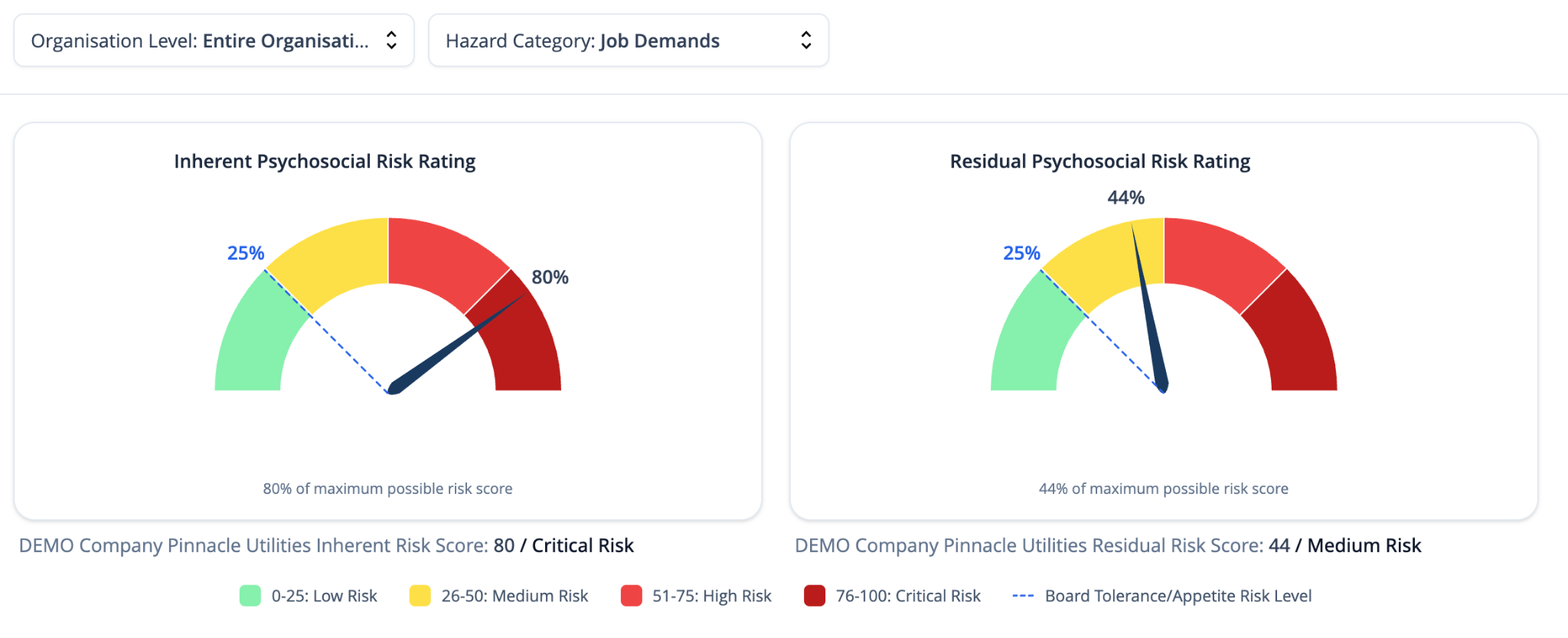
Humn IQ® brings survey information, risks, incidents and evidence together. Humn advisory and board briefings help leaders interpret that information and develop a reporting approach suited to the organisation.
Start with your psychosocial risk register and the evidence for your critical controls. Then agree reporting thresholds, owners and review frequency.
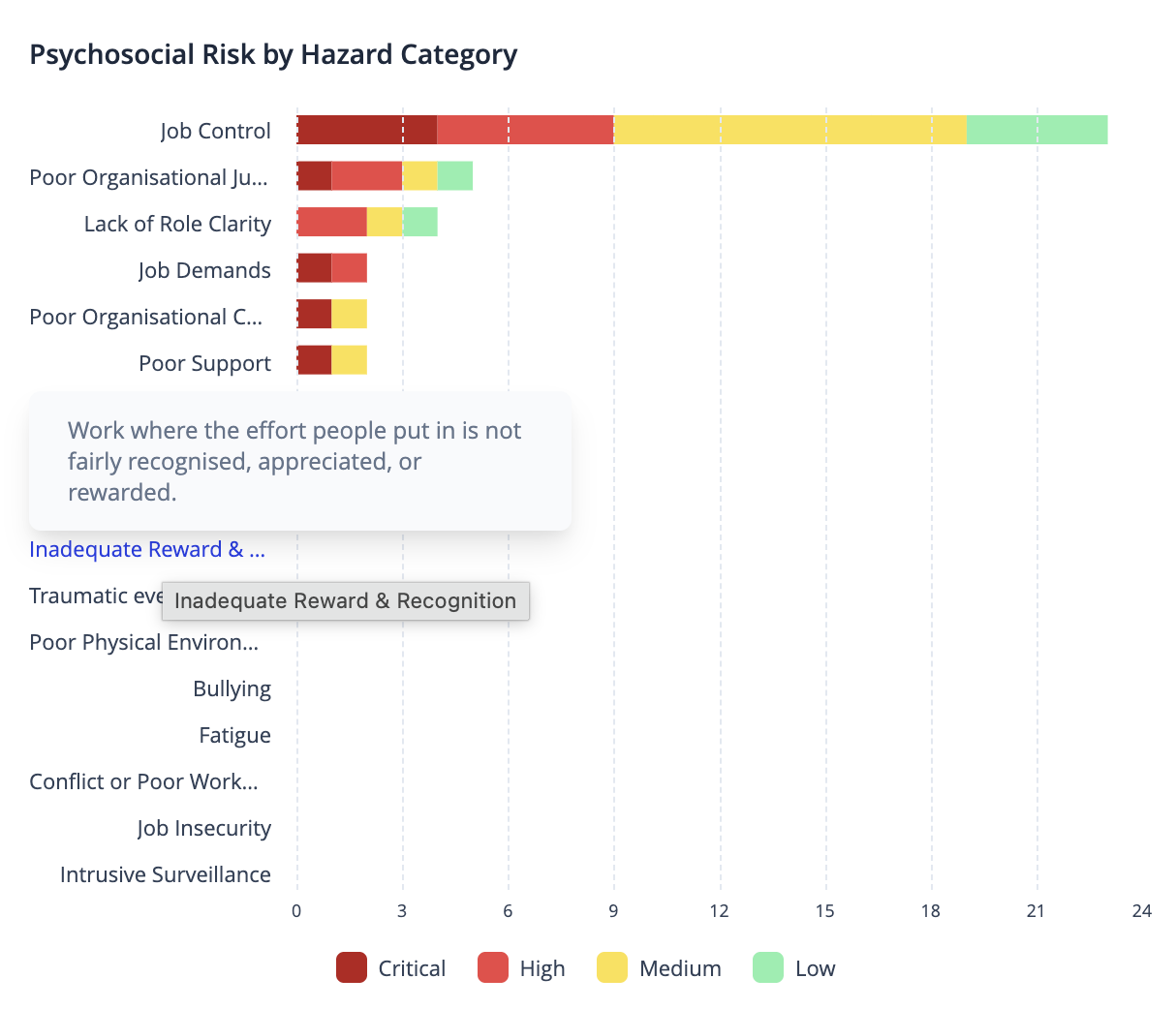
The hazard category view groups assessed risks by category and rating. It helps leaders identify where to focus attention, then look more closely at the work, controls and actions behind the picture.
A wellbeing score may provide context, but it does not show the full exposure, control environment or implementation gaps.
Set a frequency proportionate to your risks, with escalation for significant incidents, change and failed controls. There is no universal monthly or quarterly rule stated here.
Management generally carries out operational work. Officers still need the knowledge, information and verification appropriate to their own duty.
Requirements vary by jurisdiction. Check the law and approved codes applying to your workplace.
Build on what you already know about your workplace. Humn IQ® brings psychosocial survey information, risk assessment, controls and evidence together in one risk management system.
Explore guideGive directors and executives the information to ask useful questions, make informed decisions and follow through on psychosocial risk.
Explore guideMake the link between the hazard, the people exposed, the control and the evidence clear enough for someone to act on it.
Explore guideFocus attention on the controls that matter most. Define what they must do, check their performance and act when they fail.
Explore guideTalk with Humn about your assessment, controls and evidence needs.
Book a Strategy SessionInsights
Practical perspectives on psychosocial safety, better work and what is changing in the world of work.
Practical insights on psychosocial safety, better work and what is changing in the world of work. Subscribe for Humn articles, research, events and updates.