Step 01
Context
A service team is carrying vacancies and accumulating overtime. Consultation and roster records indicate sustained exposure to excessive demands.

Make the link between the hazard, the people exposed, the control and the evidence clear enough for someone to act on it.
A psychosocial risk register is a structured record of work related hazards, the risks they create and how those risks are managed. It helps teams track decisions, ownership and review. It should reflect actual work and consultation, rather than a generic list of hazards.
These are practical design recommendations, not a universally prescribed statutory register format. Numerical risk ratings can support prioritisation, but the rationale and control decisions matter.
An illustrative example of connecting the work, the control and the evidence.
A service team is carrying vacancies and accumulating overtime. Consultation and roster records indicate sustained exposure to excessive demands.
Adjust service commitments to available capacity, fill priority vacancies and define an escalation trigger for work exceeding safe capacity. Assign an operational owner and review roster and workload evidence with workers.
Check whether the agreed capacity limits are being applied and whether excessive hours and unresolved work are reducing. A completed training session alone would not verify that workload has changed.
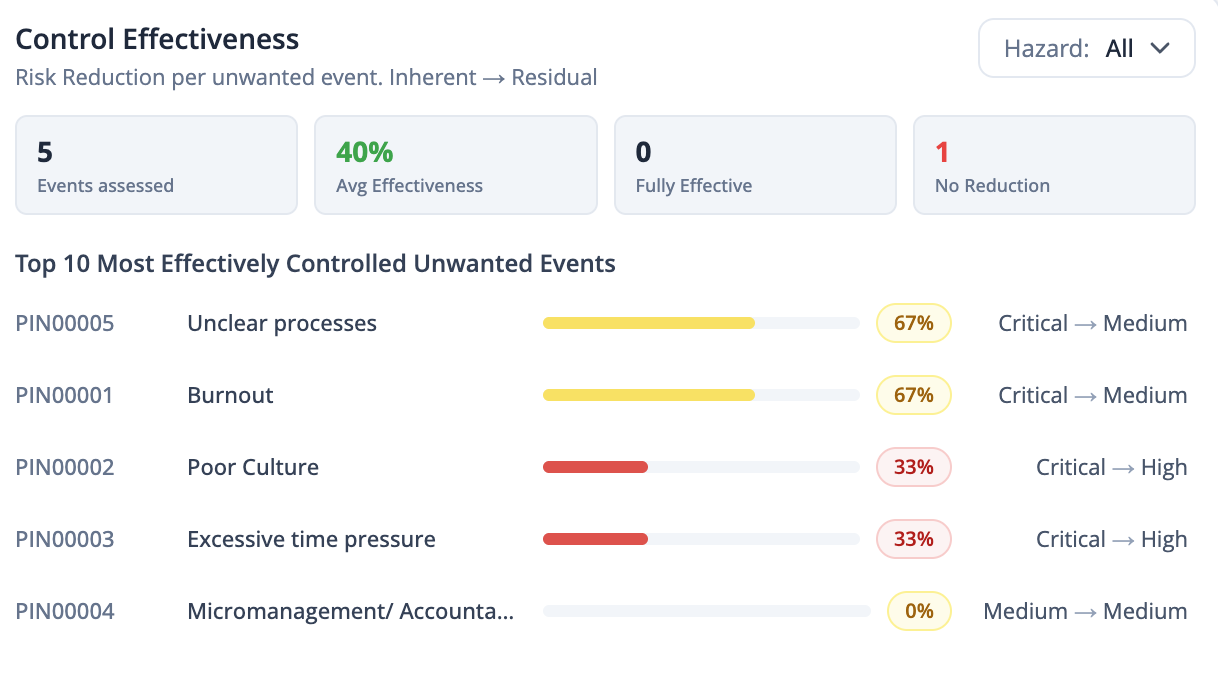
The control effectiveness view brings inherent and residual risk ratings together, helping you identify where the assessment shows a reduction and where further review is needed.
Use this alongside roster records, workload evidence and worker feedback when reviewing your controls.
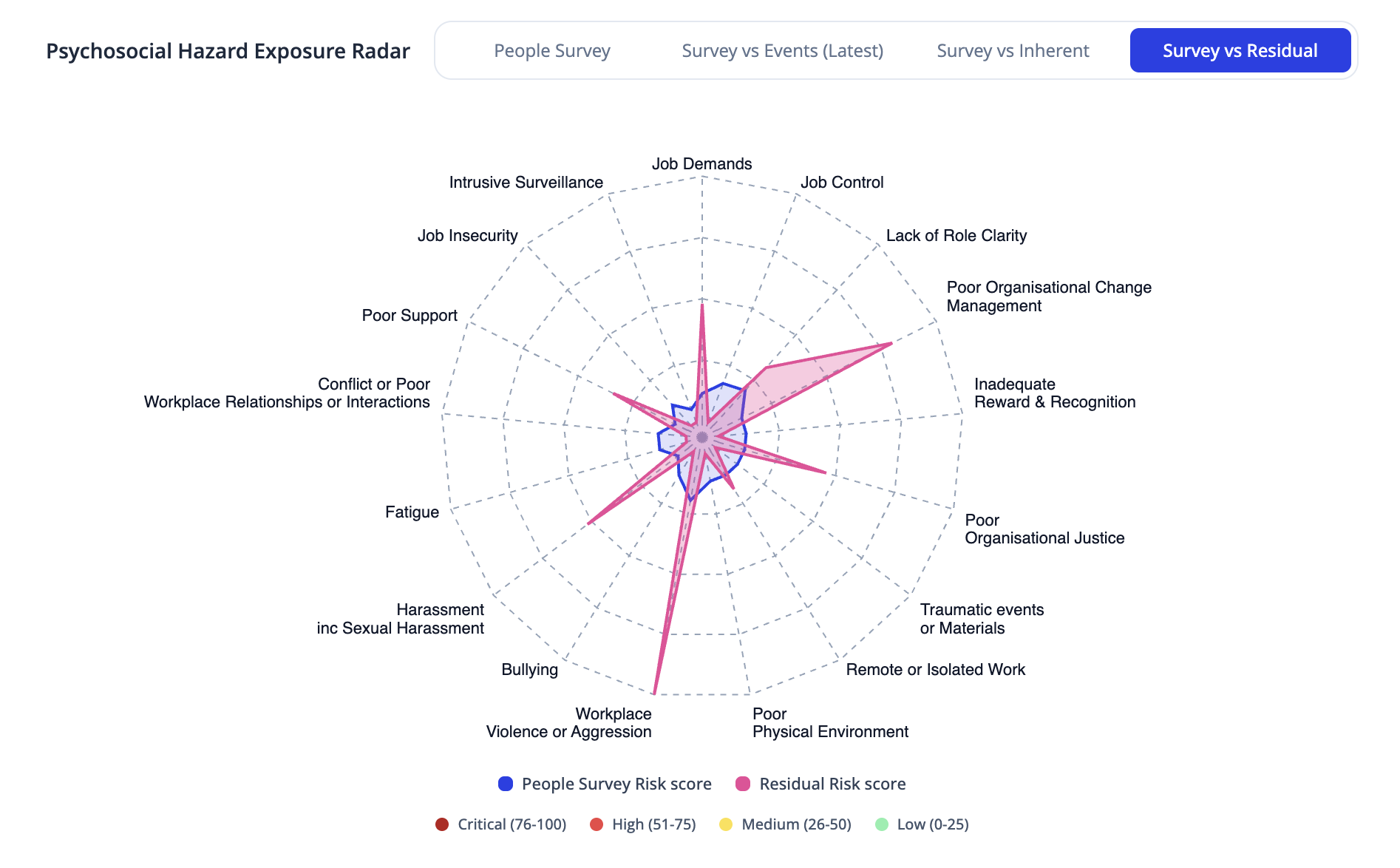
The comparison view places people survey scores beside the organisation’s assessed residual risk. Differences give leaders a starting point for questions about exposure, assessment and the controls in place. Survey scores and assessed risk ratings represent different inputs and need interpretation in context.
Connect the register with consultation, operational records and incident and investigation findings. Use review triggers for organisational change, new information or ineffective controls.
Humn IQ® connects the risk picture with survey information, incidents and evidence. Humn advisory can help you establish the assessment method and control verification approach.
Yes. The quality of assessment, implementation and review matters. Software can help maintain the connections and records as complexity grows.
A survey result is an input. Assess the work, exposure and controls using your agreed method before drawing conclusions about risk.
Agree a custodian and assign accountable owners for individual risks and controls. Ownership should follow the authority to change the work.
Requirements vary by jurisdiction. Check the law and approved codes applying to your workplace.
Build on what you already know about your workplace. Humn IQ® brings psychosocial survey information, risk assessment, controls and evidence together in one risk management system.
Explore guideGive directors and executives the information to ask useful questions, make informed decisions and follow through on psychosocial risk.
Explore guideMake the link between the hazard, the people exposed, the control and the evidence clear enough for someone to act on it.
Explore guideFocus attention on the controls that matter most. Define what they must do, check their performance and act when they fail.
Explore guideTalk with Humn about your assessment, controls and evidence needs.
Book a Strategy SessionInsights
Practical perspectives on psychosocial safety, better work and what is changing in the world of work.
Practical insights on psychosocial safety, better work and what is changing in the world of work. Subscribe for Humn articles, research, events and updates.