What the Kyle and Jackie O case means for every Australian employer
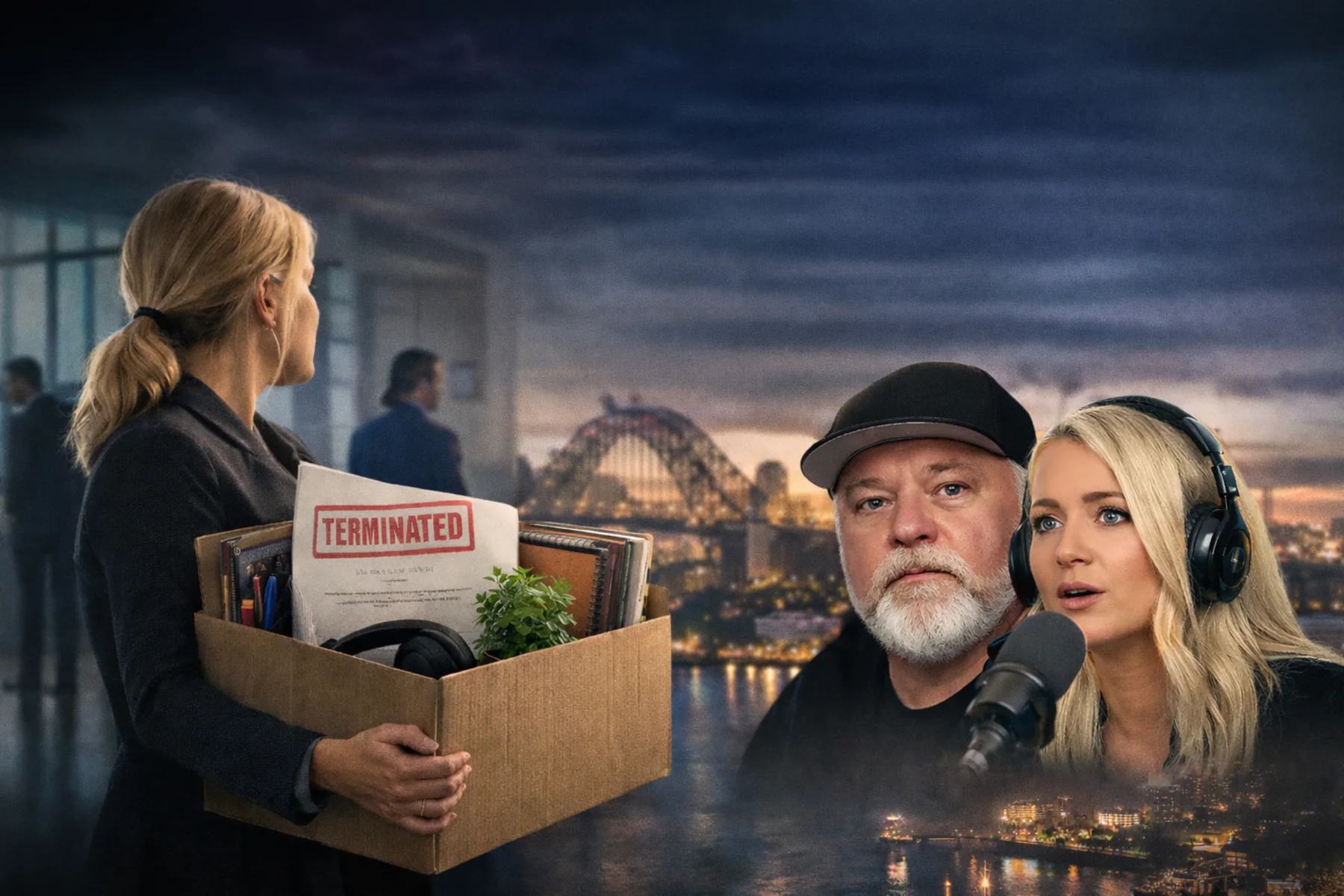
AI Generated picture
Australia's most public workplace breakdown is now a Federal Court case and it is built on psychosocial health and safety law. The Kyle and Jackie O story has been covered as entertainment news.
It should be read as a business risk story.
Because what happened inside ARN Media is not unusual and is happening in more businesses than we can imagine.
Interpersonal conflict at work happens every day. What is unusual is the sequence that followed - a formal complaint, a swift termination and a claim of more than $82 million in the Federal Court alleging adverse action under the Fair Work Act 2009.
That sequence is now a legal problem for a lot of organisations that do not realise it yet.
What actually happened
On 20 February 2026, Jackie Henderson left the KIIS FM studio mid-broadcast after her co-host made on-air comments about her performance and personal conduct, apparently it was not the first time.
Court filings reveal Henderson had escalated concerns to senior ARN executives from as early as August 2025, following an on-air incident in which Sandilands made comments her lawyers describe as offensive and degrading. She complained to the head of network and the executive producer, she followed up in September after further incidents. According to the statement of claim, senior leadership was aware of her concerns for months.
On 26 February, Henderson lodged a formal complaint letter with ARN's subsidiary Commonwealth Broadcasting Corporation (CBC). The letter stated she could no longer work with Sandilands and raised psychosocial health and safety and bullying concerns.
Her contract was terminated on 3 March. Five days later.
Henderson and her company have now filed proceedings in the Federal Court seeking at least $82.25 million in compensation, alleging the termination was adverse action taken because she exercised a workplace right. Kyle Sandilands separately filed his own claim challenging the termination of his contract. Combined, the two claims exceed $170 million, more than double ARN's current market capitalisation.
Note: ARN disputes all claims. The matter is before the Federal Court and no judgment has been handed down.
What adverse action actually means and why timing is everything
Section 340 of the Fair Work Act 2009 makes it unlawful to take adverse action against an employee because they have exercised a workplace right. Making a complaint or inquiry in relation to your employment is a workplace right. So is raising a work health and safety concern.
Here is the part that catches employers off guard when adverse action and psychosocial safety meet.
Once an employee raises a WHS complaint and an employer takes any adverse action after that point, the burden of proof shifts. The employer must prove the complaint was not a reason for the decision, Not the only reason, Not the main reason, Just a reason.
When the gap between complaint and termination is five days, that burden is very hard to discharge.
This is not a technicality, it is a deliberate design feature of the legislation. It exists to protect people who speak up about unsafe workplaces from being punished for doing so. And psychosocial complaints, including complaints about bullying, poor workplace relationships and harmful interpersonal conduct, sit squarely within its scope.
There is a second layer of exposure here too. Where an employer has documented knowledge of interpersonal risk and does not act on it, that history can be treated as evidence of a foreseeable hazard that was not controlled and internal emails, text messages and meeting notes are discoverable. If senior leadership was told about the risk and the file shows no response, that is a problem.
Three things that created the risk
Looking at the ARN case through a psychosocial safety lens, three things stand out:
- 1. Complaints were received but not adequately actioned.
Henderson raised concerns in August and September 2025. Court filings allege that despite those concerns reaching senior leadership, ARN did not implement adequate controls to manage the risk.
- 2. No safe system of work existed before the complaint.
Model WHS legislation requires a PCBU to identify, assess and control psychosocial hazards as part of ordinary operations, not in response to a formal complaint. A reactive system is not a safe system. The documentation that demonstrates each of those steps is what regulators and courts look for.
- 3. Adverse action followed a WHS psychosocial safety complaint.
The termination came five days after the formal complaint. Under section 340 of the Fair Work Act, that sequence creates a presumption that needs to be rebutted. Without a carefully documented decision trail that demonstrates the complaint played no operative role in the outcome, that rebuttal is difficult.
The financial cost of getting this wrong
This is not just a legal story. It is a financial one.
When Henderson's lawsuit was announced, ARN's market capitalisation dropped 19% in a single trading session, falling to $73.6 million. The Henderson claim alone exceeds that figure. Combined with the Sandilands claim, ARN faces exposure of more than $170 million against a company worth less than that.
Over the twelve months to April 2026, ARN's market capitalisation declined by 61%. The company was removed from the ASX All Ordinaries Index in March 2026. In FY2025, before any of this litigation, it had already reported a 23% decline in underlying EBITDA and a 10% fall in total revenue.
The litigation risk alone, before any judgment, was enough to destabilise the business. Shares fell, index funds sold, advertisers paused and the story ran for weeks.
Unmanaged psychosocial risk does not stay in HR.
It reaches your investors, your board, your balance sheet and your brand.
What good practice actually looks like
None of this means you cannot manage poor performance, address conduct issues or make hard decisions about employment. It means you need to do those things with psychosocial risk embedded into the process, not bolted on afterwards.
- 1. Build your psychosocial risk system before you need it.
Document your hazard identification, risk assessment, controls and review cycles. An organisation that can point to this system when a regulator or court asks is in a fundamentally different legal position to one that cannot.
- 2. Take complaints seriously and act promptly.
Where a formal psychosocial safety or bullying complaint is received, investigate it appropriately and ensure the complainant is not disadvantaged for raising it. Document every step.
- 3. Train your people leaders on psychosocial duty.
People leaders need to understand that how they respond to interpersonal conflict, underperformance and escalated concerns creates direct risk exposure for the organisation. Awareness is not enough, they need tools, frameworks, confidence and support.
- 4. Consult workers in designing the system.
Consultation is a legislated obligation under model WHS legislation, not optional. Where an organisation cannot demonstrate it consulted workers on psychosocial risks and the controls in place to manage them, that gap is itself a compliance failure, separate from any harm that results.
- 5. Separate employment decisions from complaint history.
Any decision about someone's employment after they have raised a WHS complaint needs to be made carefully, documented thoroughly and legally reviewed before it is communicated. The timing and the paper trail matter enormously.
This is not a media industry story
The temptation when you read a case like this is to think it is about celebrities, entertainment contracts and unusual circumstances. It is not.
The legal mechanics are identical for any employer managing a difficult interpersonal situation. The duty to have a safe system of work for psychosocial hazards applies whether you employ twenty people or twenty thousand. The adverse action provisions apply to every worker who raises a WHS complaint. The burden of proof shifts the same way regardless of industry.
The question is not whether your duty exists. It is whether you can demonstrate you are meeting it.
Most organisations cannot, and not because they do not care, but because they have not yet built the system that makes their care visible and defensible.
This is exactly why Humn exists
Humn is a psychosocial safety consultancy and technology company built on the [Comcare 17 Psychosocial Hazards Framework](https://www.comcare.gov.au/safe-healthy-work/prevent-harm/psychosocial-hazards) and the [Safe Work Australia Model Code of Practice](https://www.safeworkaustralia.gov.au/doc/model-code-practice-managing-psychosocial-hazards-work).
We work with organisations of all sizes to build the systems, capability and evidence they need to manage psychosocial risk and demonstrate compliance.
We can work with you before a complaint is lodged, before a notice is issued and before someone is harmed and includes:
- Identifying hazards before they become incidents, using people-led practice, not just technology and definitely not a culture or engagement survey.
- Building and documenting your system of work by consulting with your people - in person and in a psychologically safe environment.
- Monitoring risk across your workforce continuously and measuring whether controls are actually working using the [Humn IQ®](https://www.humn.global/humn-iq) system.
- Helping you demonstrate compliance when the regulator asks - and they will ask.
If you would like to understand where your organisation sits on psychosocial risk, get in touch.
[www.humn.global](http://www.humn.global) [ ](/contact)[hello@humn.global](/contact) +61 8 7008 9826
Suite 44, Marnirni-apinthi Building,
Stone and Chalk
Lot Fourteen
North Terrace,
Adelaide SA 5000
Sources
Henderson v Commonwealth Broadcasting Corporation (CBC/ARN), Federal Court of Australia, statement of claim filed March 2026. ARN Media ASX announcements, 3 March and 31 March 2026.
Fair Work Act 2009 (Cth), section 340. Work Health and Safety Act 2011 (Cth), clause 55C of the WHS Regulations.
Mumbrella, 'ARN plunges as wider Unmade Index gains ground', 31 March 2026 (61% market cap decline over 12 months; 19% single-day drop; $73.6M market cap).
Mediaweek, 'ARN FY25 results show revenue and EBITDA decline', February 2026 (23% EBITDA decline; 10% revenue decline). Mediaweek, 'ARN Media to exit All Ordinaries', March 2026.
HCA Magazine, 'Jackie O warned ARN about Kyle Sandilands abusive on-air behaviour months before explosive split', April 2026. The New Daily, 'Jackie O drops $82m bombshell in messy radio break-up', March 2026.
Safe Work Australia, Model Code of Practice: Managing Psychosocial Hazards at Work, 2022. Comcare, 17 Psychosocial Hazards Framework.
All allegations and claims are as filed in Federal Court proceedings. ARN disputes all claims. No judgment has been handed down.
This content is for informational purposes only and does not constitute legal advice.
Know your hazards. Understand your risk. Prove your controls.
Humn helps organisations turn psychosocial risk into clear action, stronger controls and evidence leaders can use.
Talk to Humn